

Why Technical Thinking Still Matters in Real Time Workflows: Interview with Andi Inzinger
Hi Andi, thanks for taking the time to speak with us. Could you start by introducing yourself and telling us about your background in 3D and real time technologies?
Sure, my name is Andi, I’m a 3D artist based in Munich, Germany. Over the years, I’ve been working across industries on various projects, primarily in the areas of FMCG, Automotive, Architecture and Electronics.
I’ve always been interested in computer graphics, and I guess it’s already 20 years ago that I tried a demo version of Cinema 4d and somehow was hooked on it. The idea of being able to visualize anything in 3D I could think of was just fascinating and I started delving deeper into the subject.
I added Unreal Engine to my daily pipeline about 8 years ago and never looked back. The funny thing is that I get just as excited as a little kid every single time I try something new with it. And I guarantee you won’t run out of opportunities to do so as Unreal Engine is simply too extensive to master everything!
Over the years I’ve worked with a whole bunch of different 3D applications and probably most of the well-known rendering engines out there. This allowed me to develop a good sense of which technology is best suited for which project. I really enjoy trying out new software by myself and pushing it to the limit to decide whether to recommend it for specific projects.
Career & Technical Direction
You’ve worked across multiple areas of 3D production and real time technologies. Looking back, what were the key moments that shaped your approach to digital creation?
Oh, there were so many of them over the years… new modeling features, improved material workflows, GPU accelerated render engines and probably Realtime rendering being the biggest game changer.
To be honest, I was feeling overwhelmed by all these different disciplines at the beginning, I simply had no clue that each of them per se is its own profession 😀 So I just kept learning and got better over the years.
As a generalist, you move between different disciplines. Do you see this versatility as an advantage today, or do you feel the industry increasingly rewards deep specialization?
Moving between and working in different disciplines nowadays is what keeps me curious. For me it’s definitely an advantage to be able to estimate the workload and resources for interdisciplinary projects. I’m lucky to have a growing network of amazing artists that I can reach out to in case deeper specialization is required.
Real Time & Unreal Engine
Real time workflows have evolved rapidly over the past decade. What attracted you to working with Unreal Engine and real time pipelines? From your perspective, how has real time technology changed the way artists think about environments, assets and rendering compared to traditional pipelines?
When I look back on that time when even GPU rendering wasn’t a thing and compare it to today’s technology, it’s amazing how much has changed in those years from a technological standpoint!
The ability to see everything rendered in Realtime without having to press the render button and wait for ages is what got me into Unreal Engine. But at that time things like Lumen and Nanite didn’t exist yet, so light baking was the way to go and having clean UVs is crucial to this technology.
Now that Nanite, Unreal Engine’s virtualized geometry system exists, many artists tend to just throw anything in their levels and think that Unreal will do the rest for them.
But that’s not the case and optimizing still plays a crucial role in case you want to ensure smooth gameplay and a high frame rate.
So especially in Games, going for a clean UV layout and baking your texture maps in a high- to low poly workflow will save you memory.
Workflow & Production Thinking
When approaching a new project or asset, how do you usually structure your workflow from early concept to final result?
Usually, every project starts with a briefing from your client. Getting to know each other, getting a feeling how your client thinks about the product and identifying approaches that might be best suited to the project is an essential step. At that point it’s also important to estimate restrictions that could have an impact on the progress of the project.
Every project starts with gathering references of the objects that’s going to be captured by the (virtual) camera. The more, the better! Dimensions, Blueprints, different angles, color swatches, material properties, environments, lighting conditions etc. – you must get a feeling for the product, especially how it reacts to light.
In most cases the manufacturer will provide CAD data, and I’ll structure the data depending on the functionality and mobility of the component if parts of the product are animated. In case there are parts that will deform, they will probably have to be remodeled to avoid artifacts during deformation.
What render engine should be used for the project, what will be the output format and the output size? These are all factors that you should have in mind and that should be considered from an early stage on as they can have a critical impact on your project.
Always plan for a little extra time, you never know!
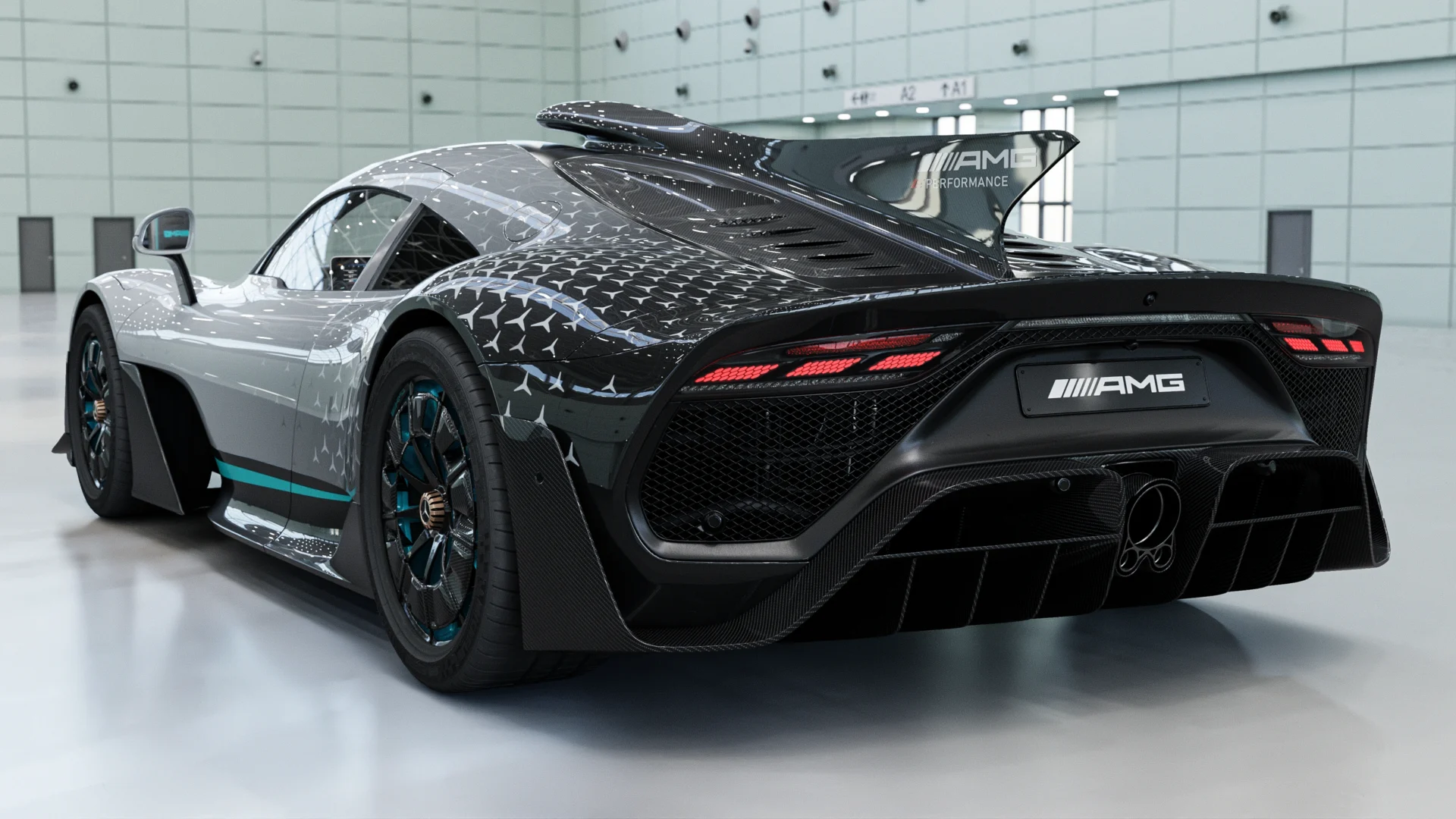
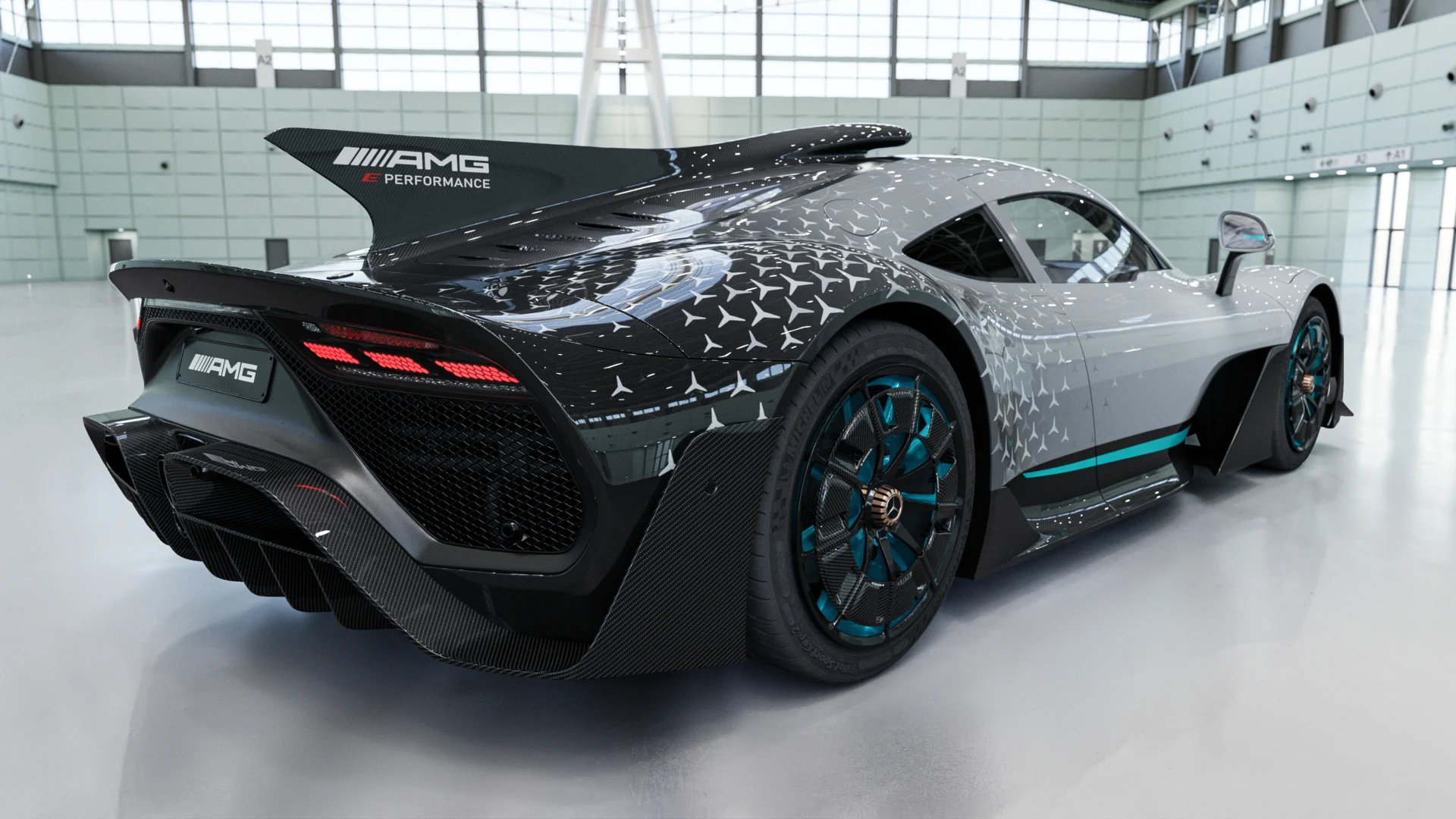
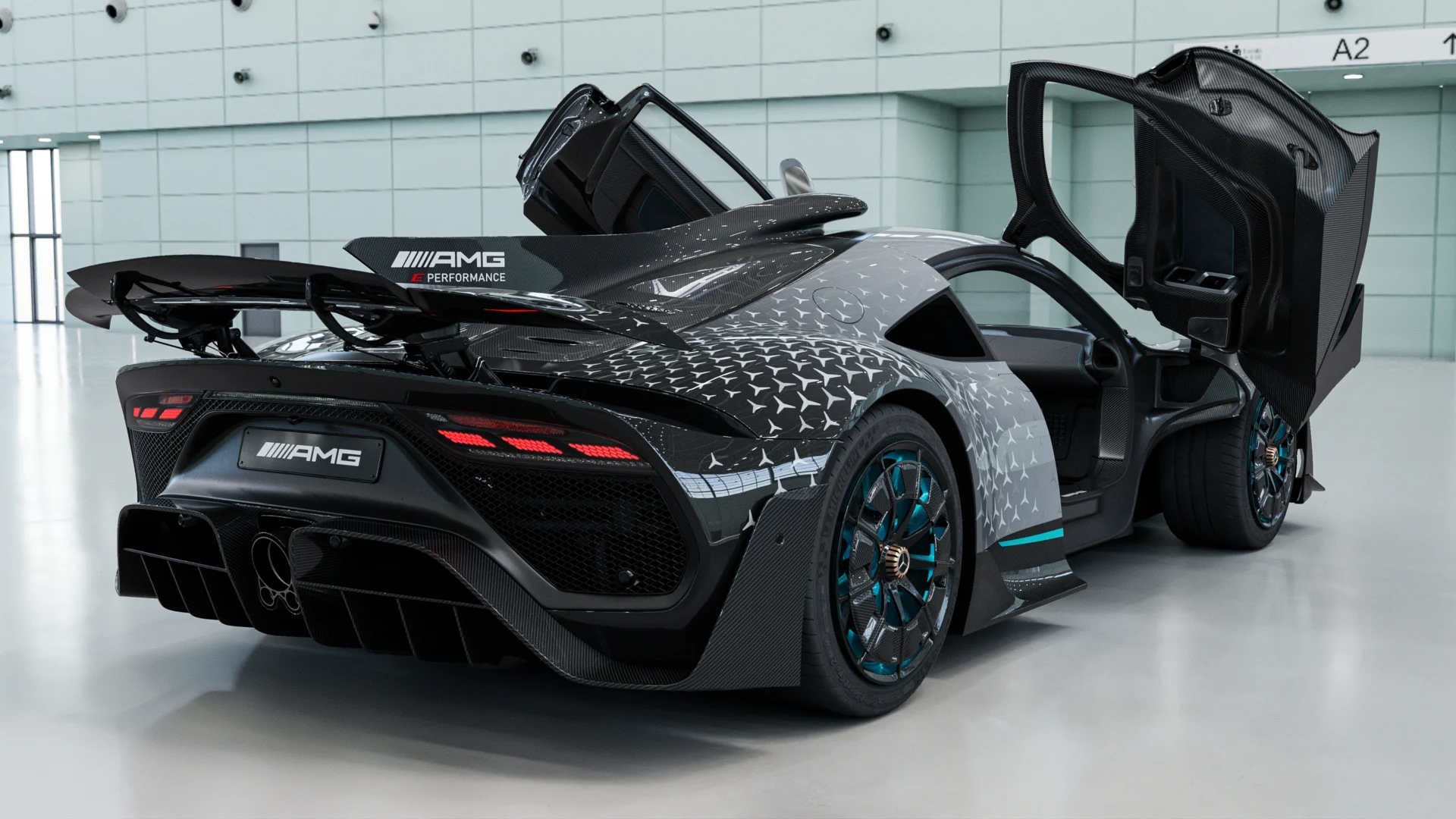
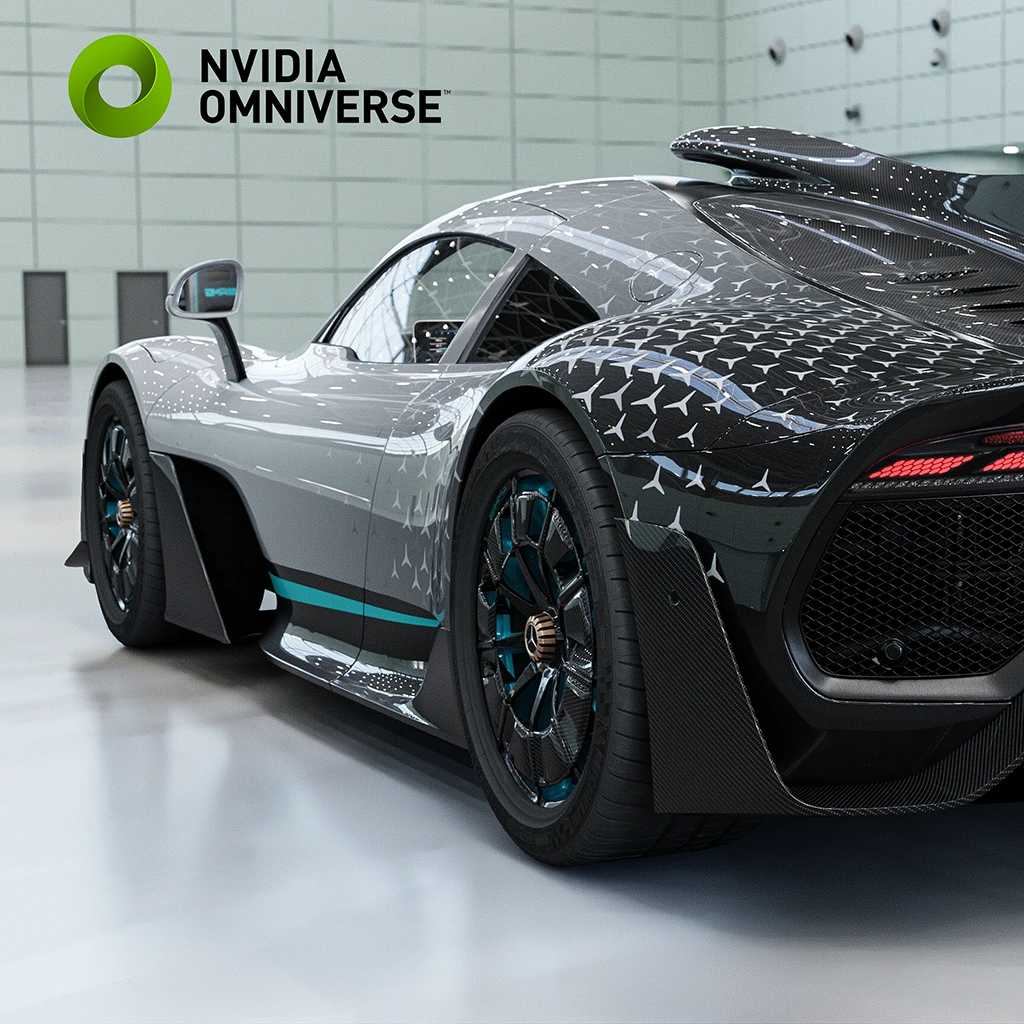

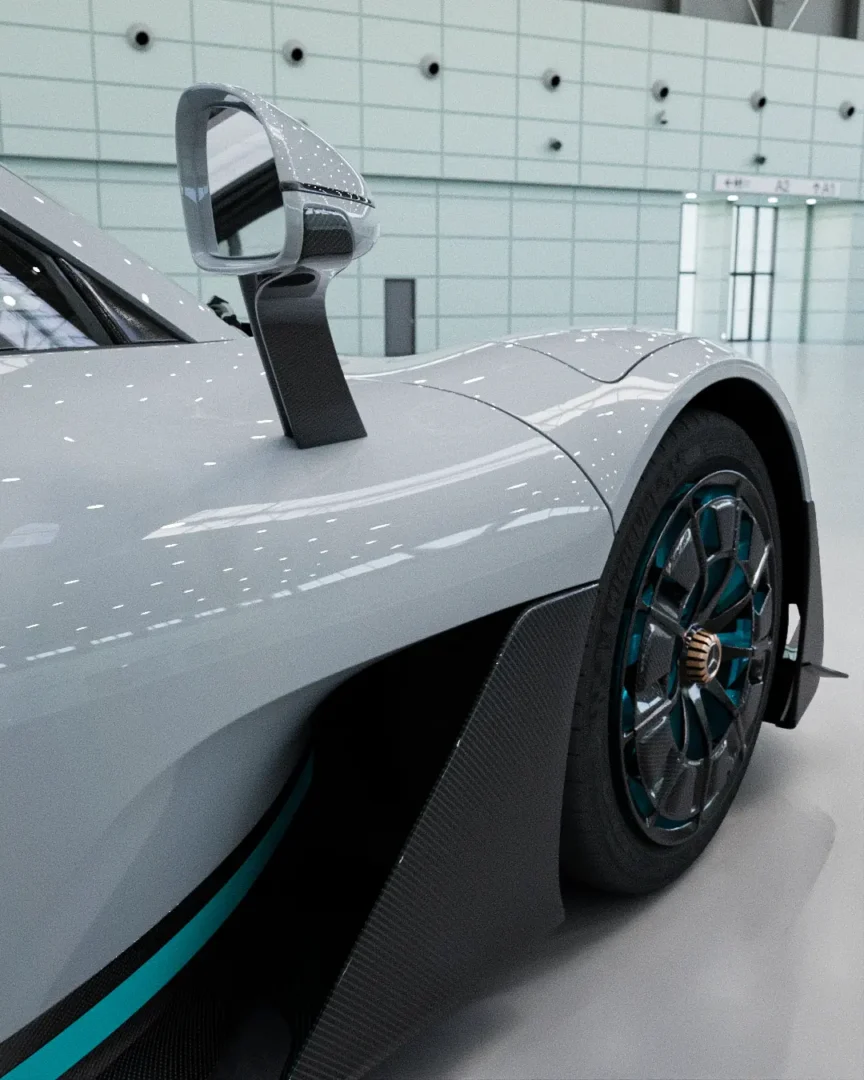
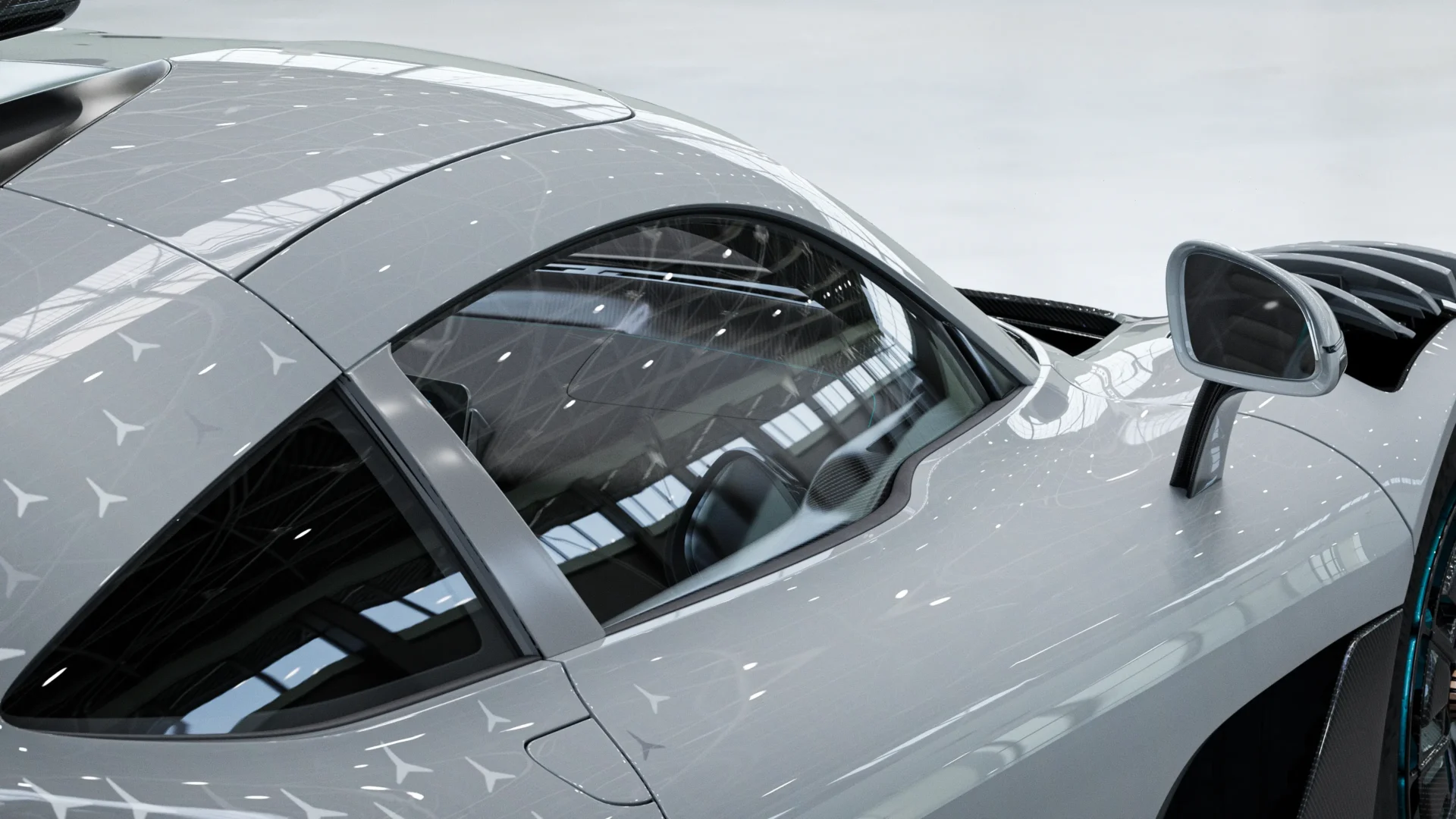
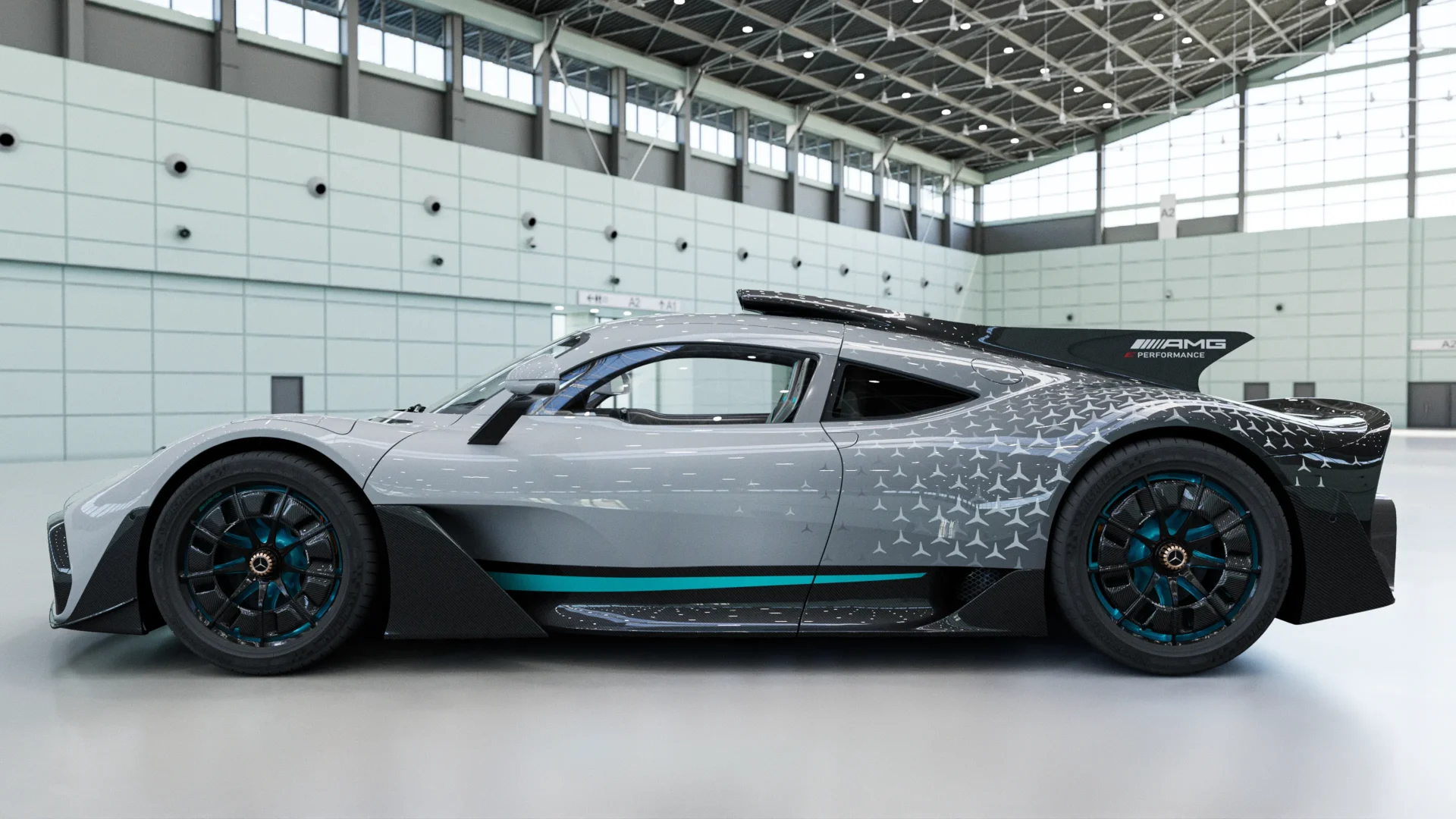
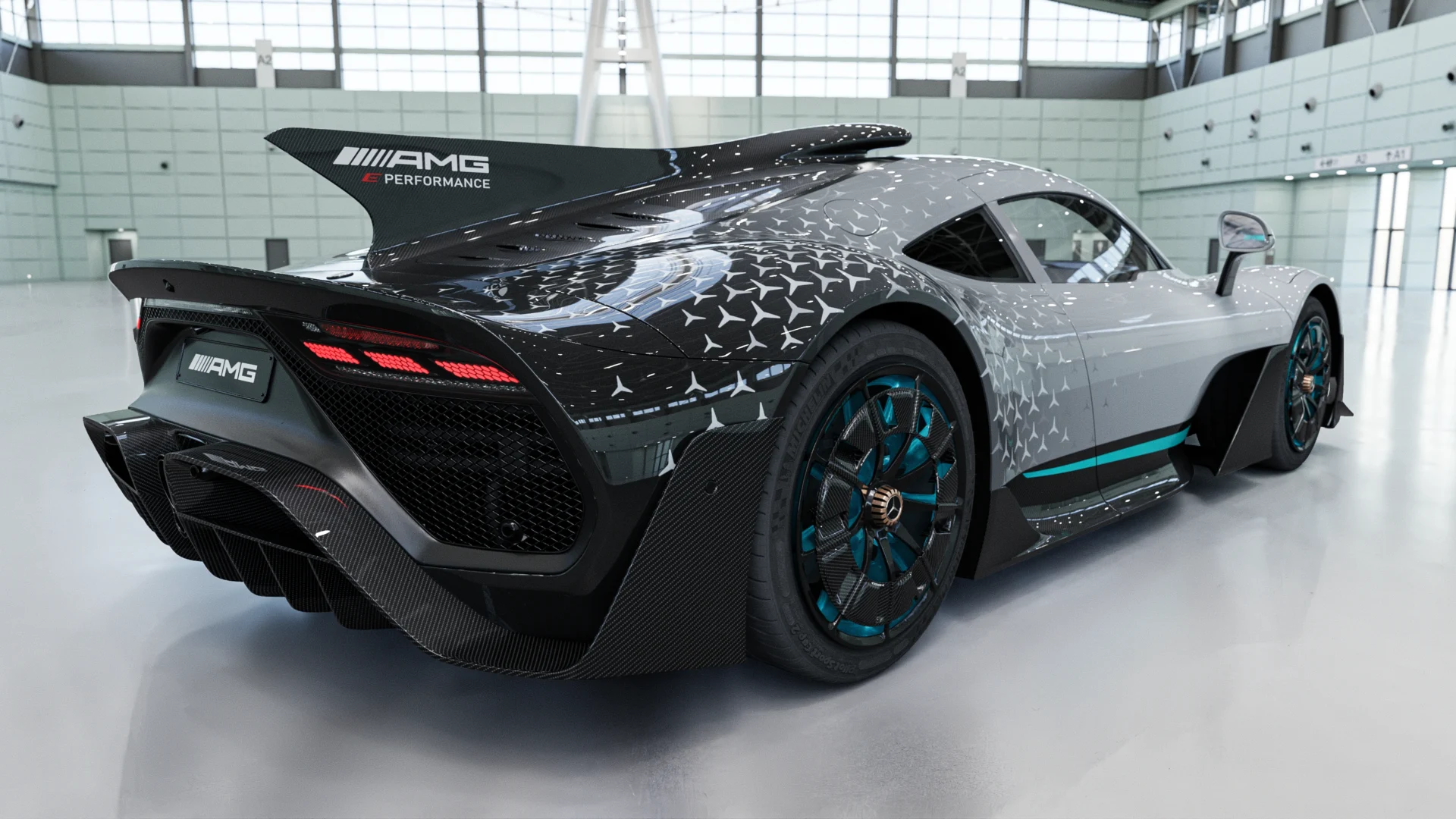
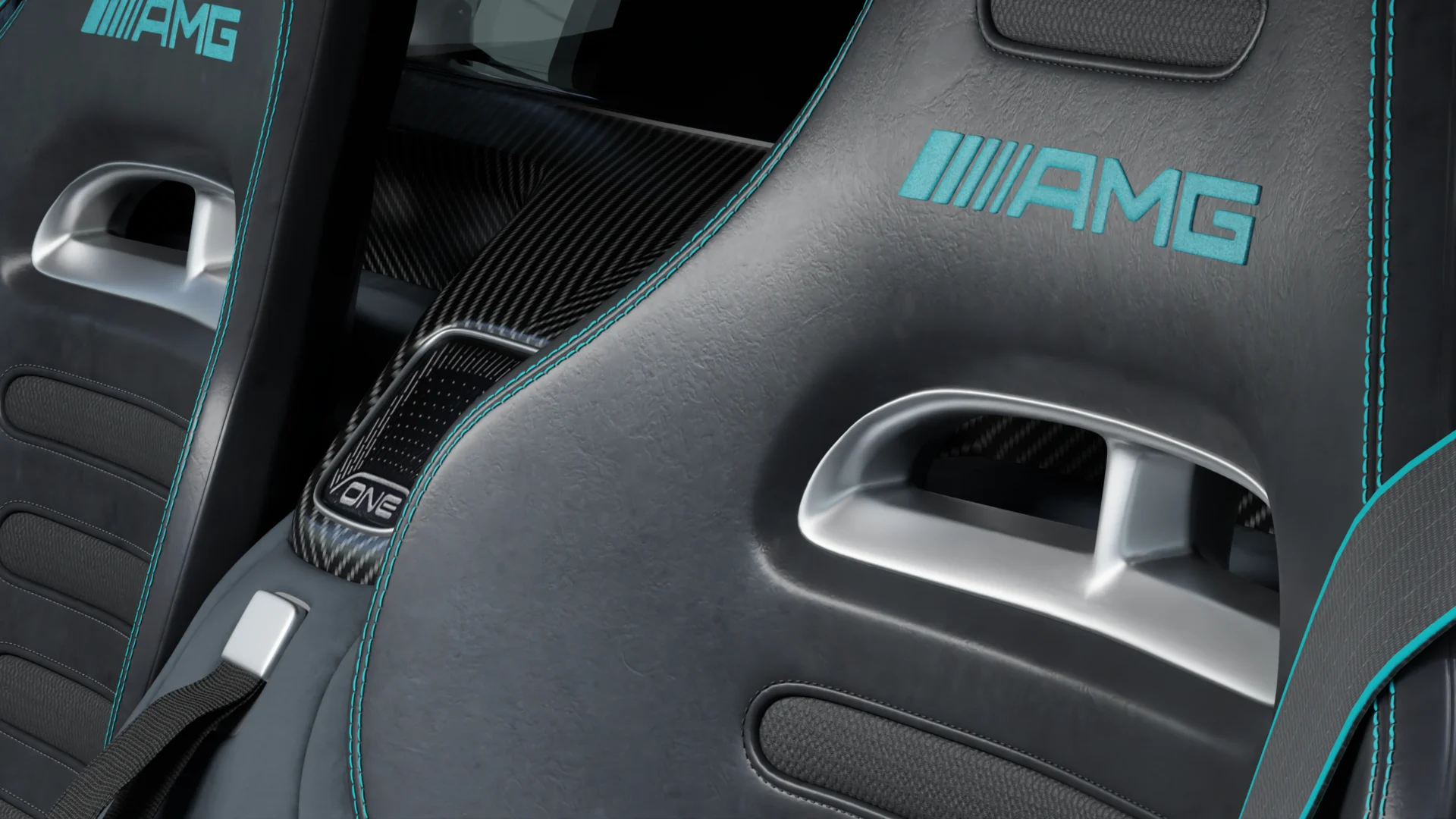
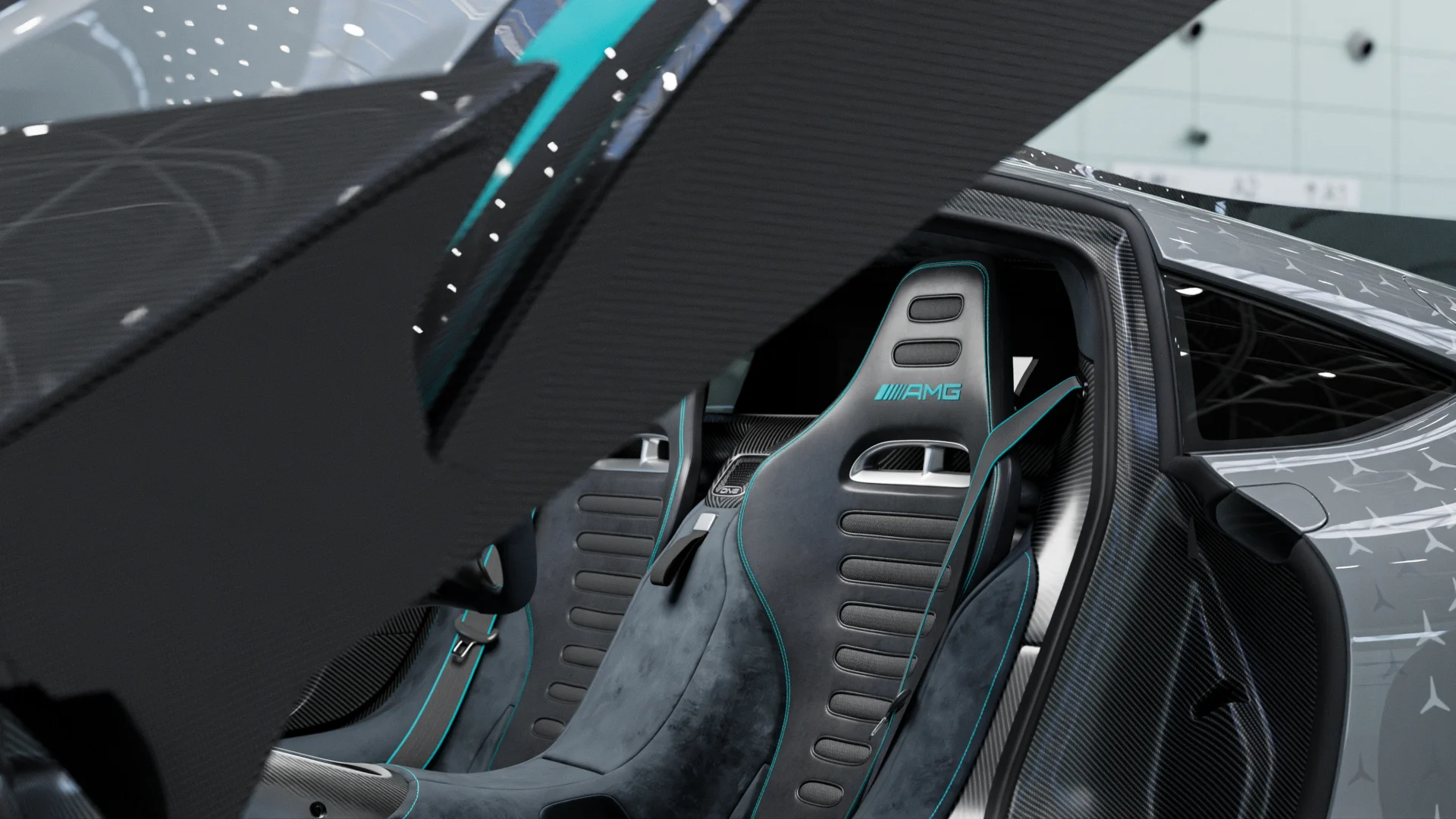
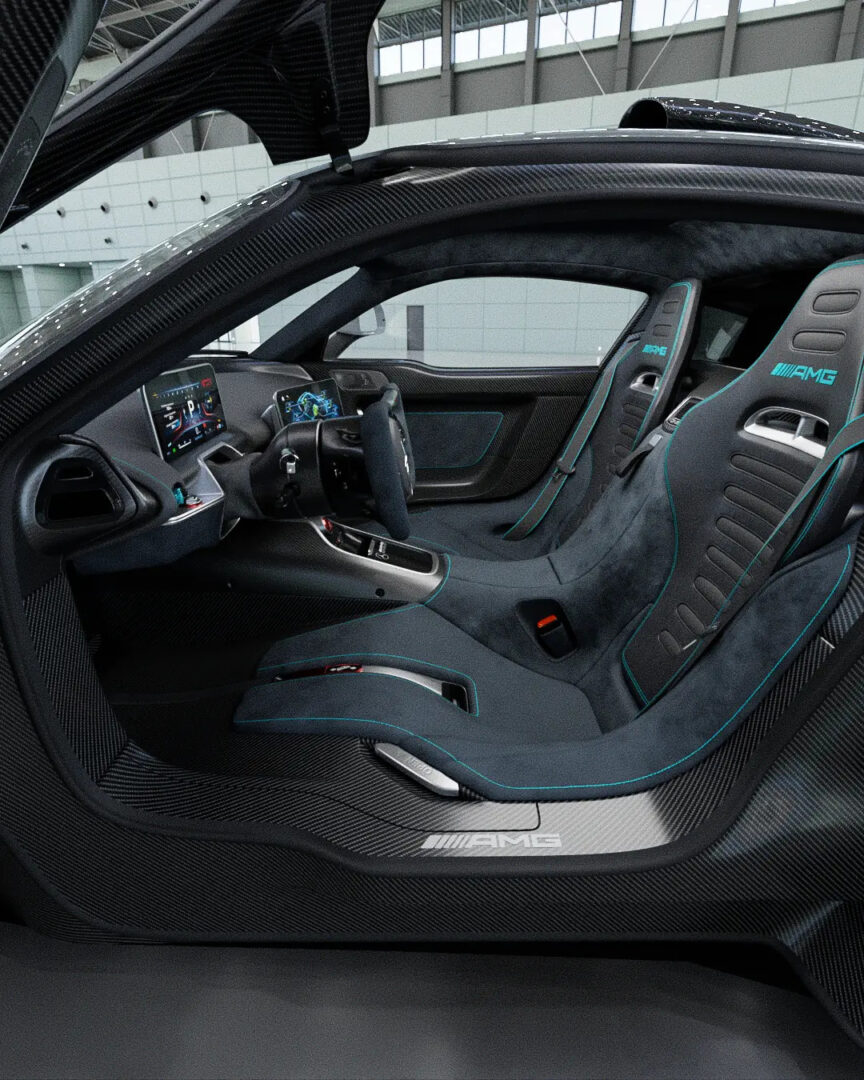
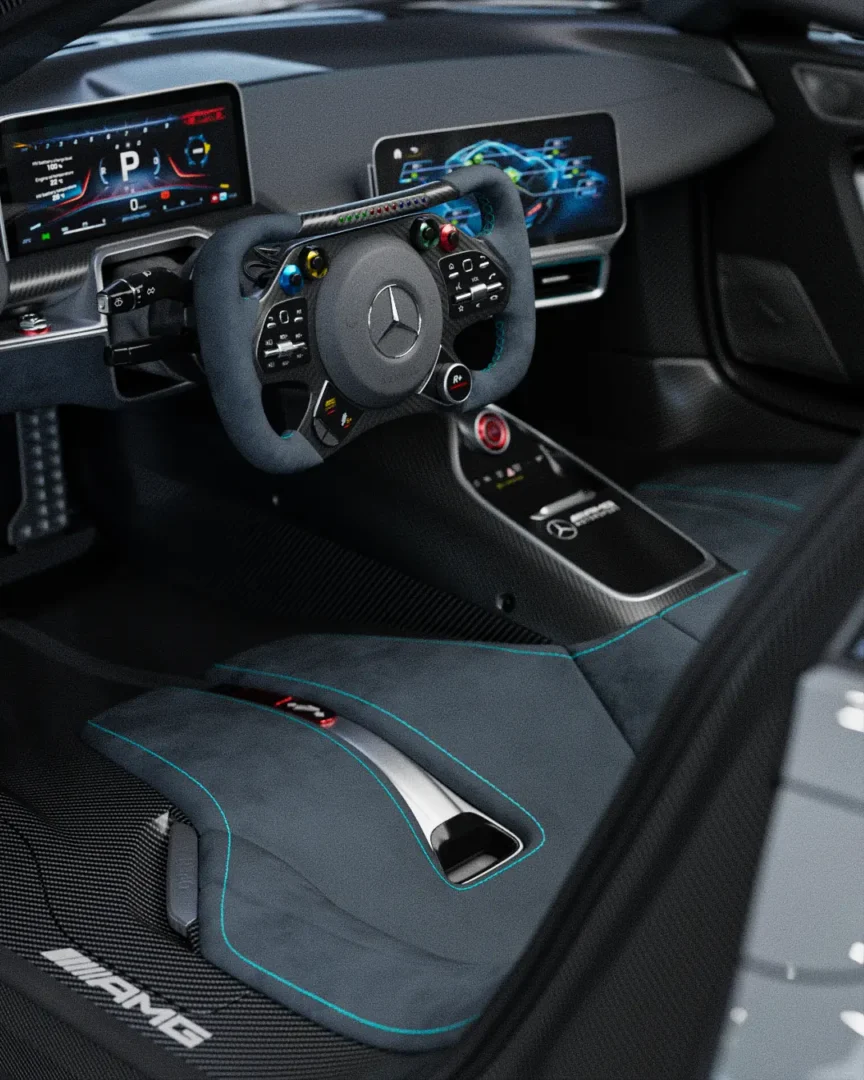
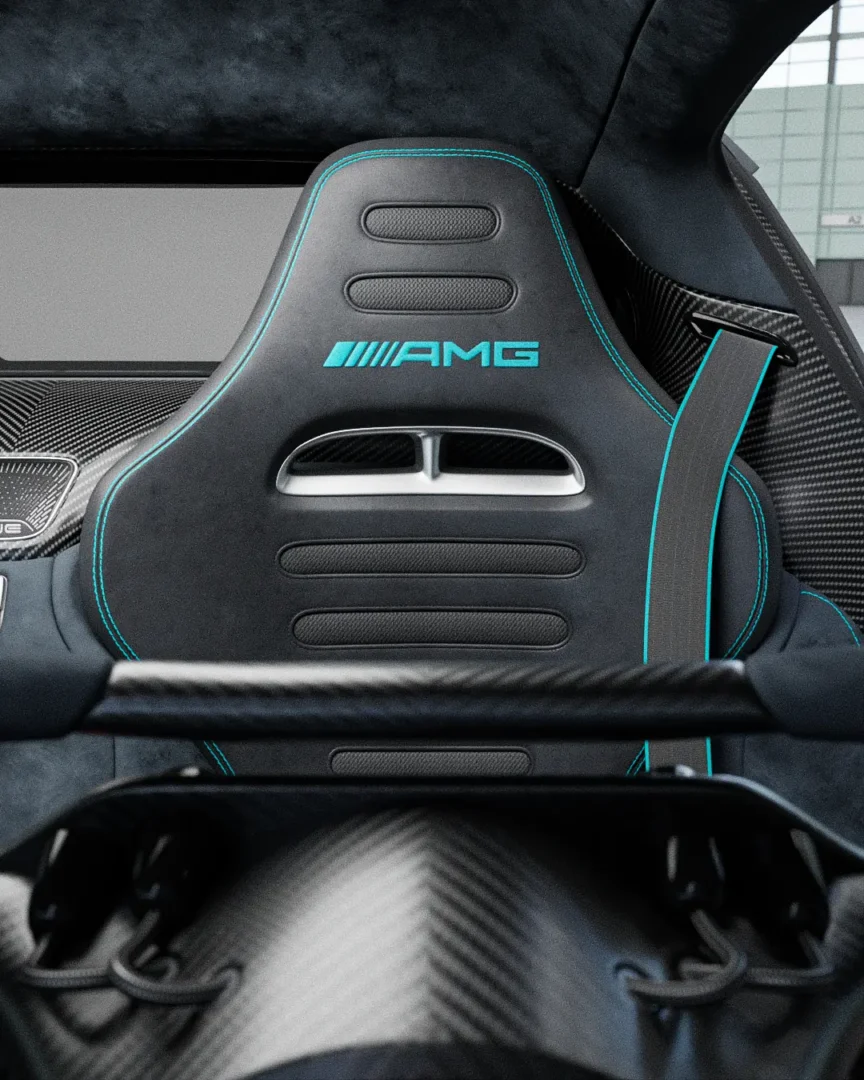
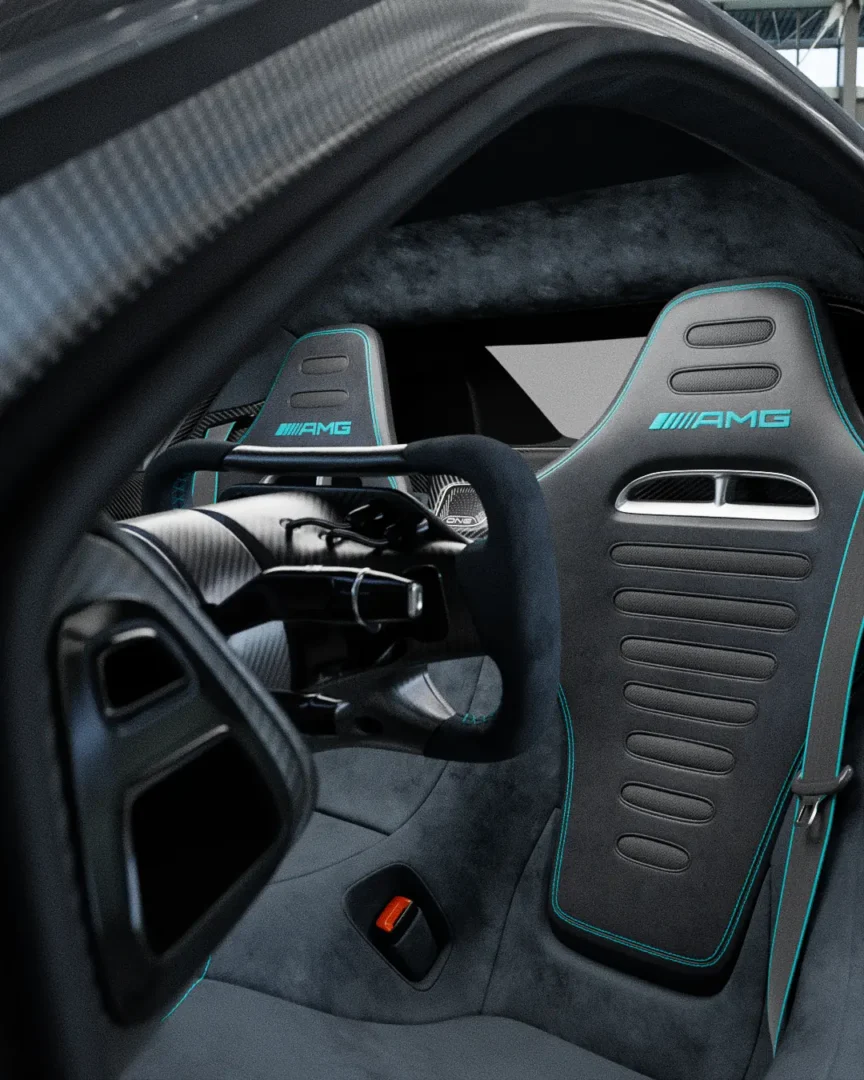
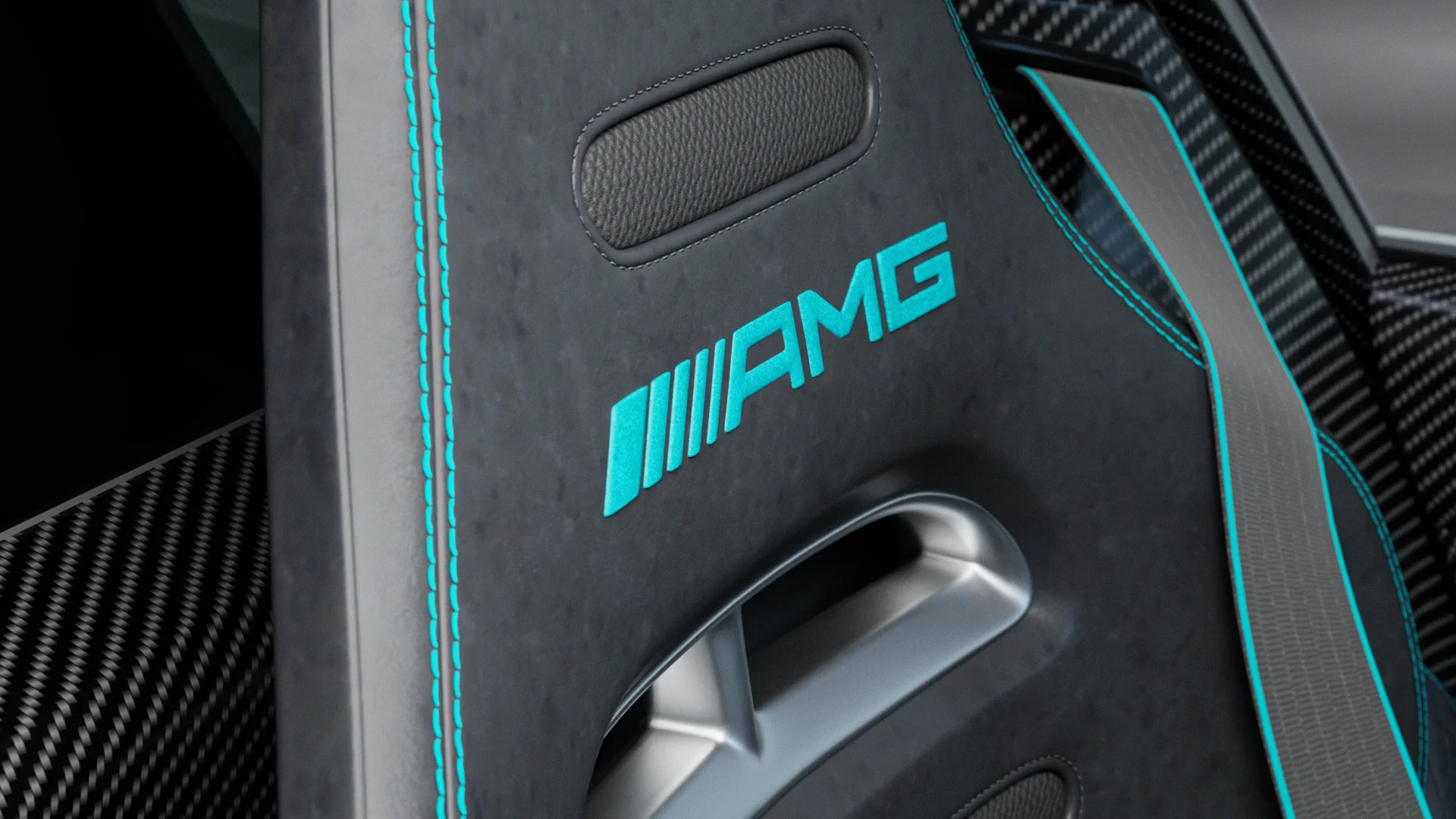
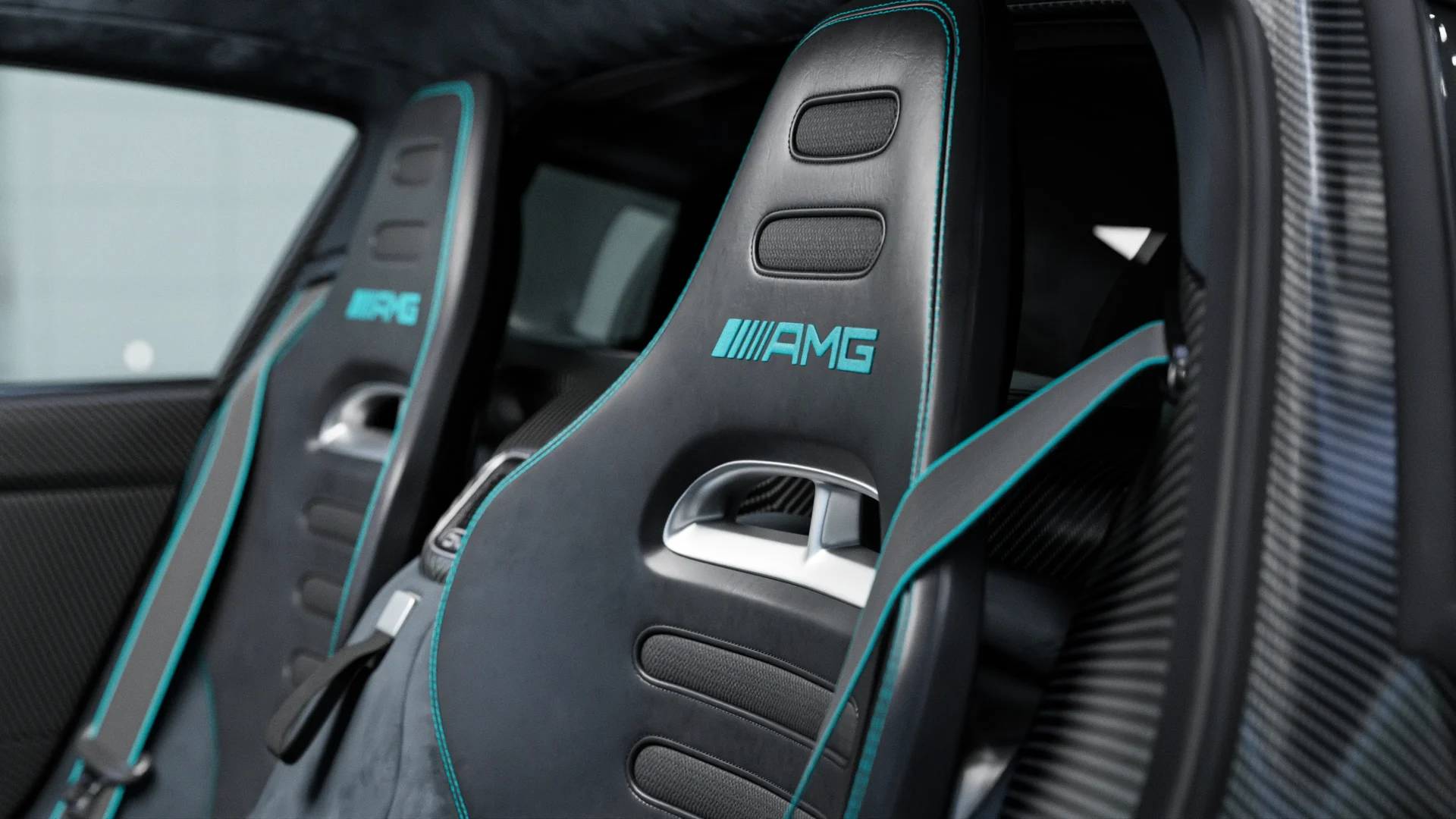
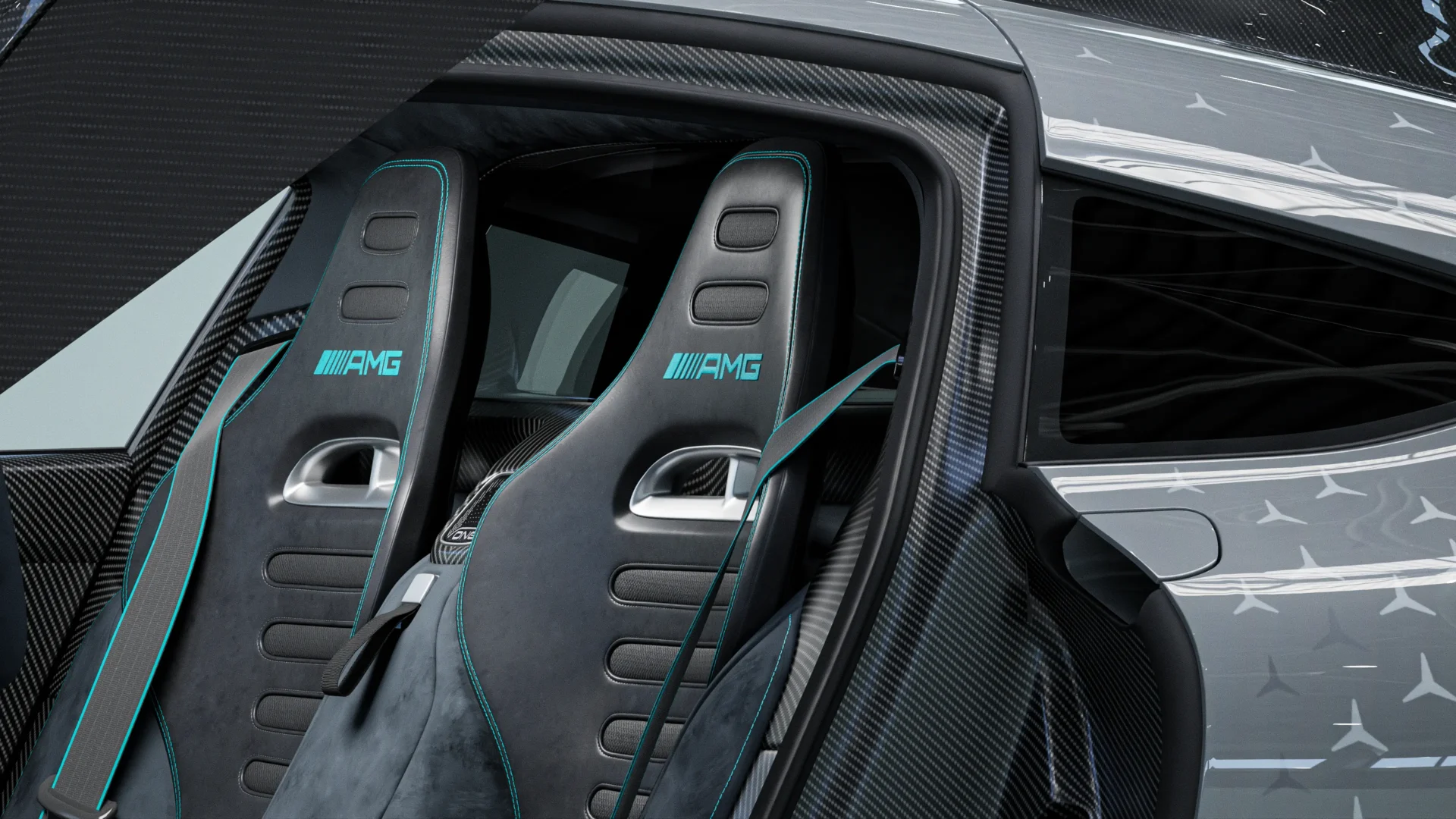
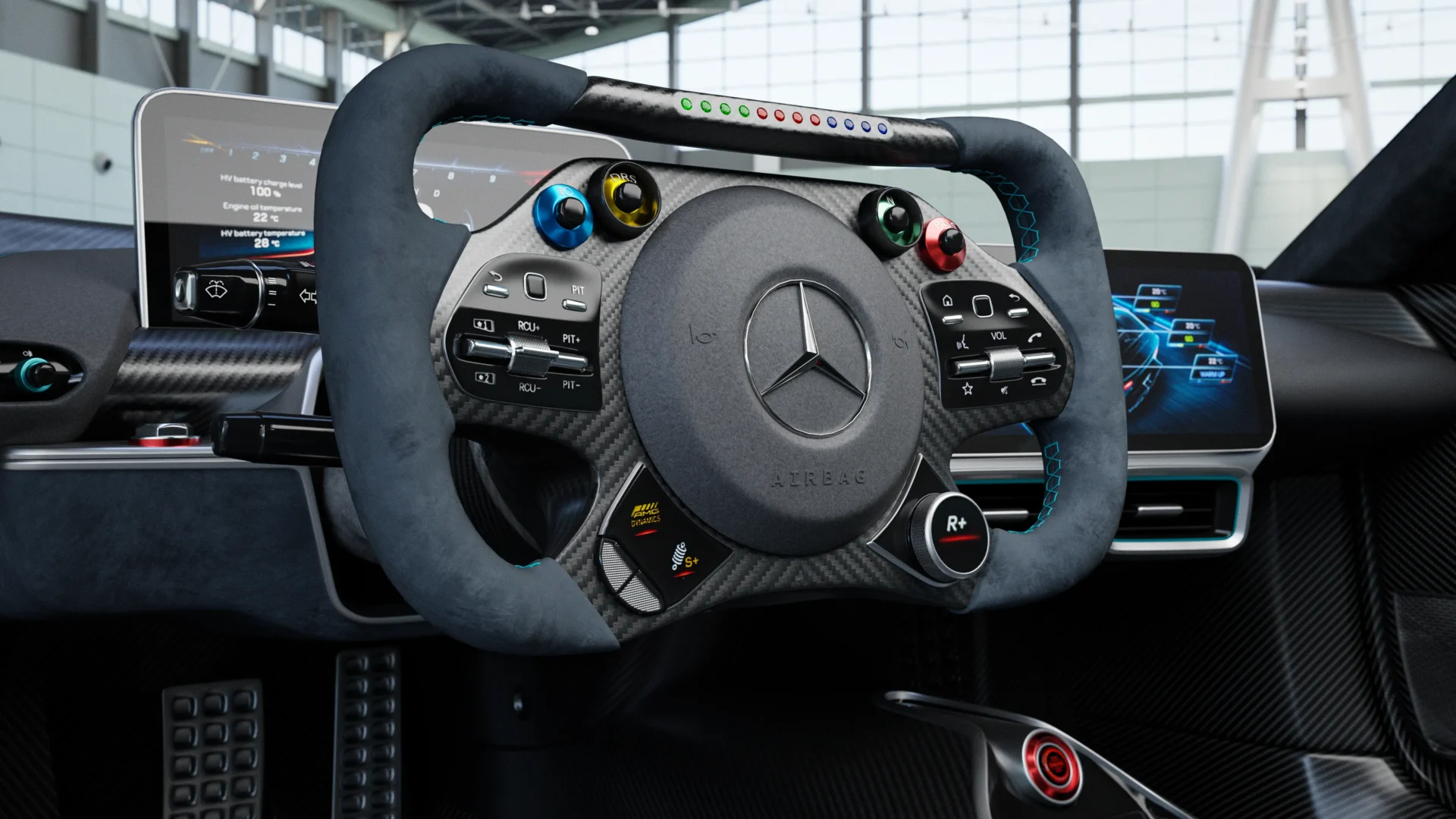
“AMG One” Project
This project was created in NVIDIA Omniverse, a modular platform that uses advanced APIs and microservices to build 3D applications, powered by OpenUSD and NVIDIA RTX. Omniverse let’s you connect and accelerate 3D workflows, e.g. with connectors that help live link various 3D applicatoins, such as Maxon Cinema4D, Rizom UV, Substance Painter and NVIDIA USD Composer, which were used in this project.
UV Mapping & RizomUV
In real time workflows, clean UVs are often critical for performance and material consistency. How important is UV quality in your pipeline? How does RizomUV fit into your workflow ?
Having clean UVs and a consistent texel density are often underestimated but are crucial to most of my projects, whether it’s for classic product visualizations, automotive or architectural projects.
RizomUV is an integral part in my 3D workflow. As soon as I have objects where I need precise UVs for Texturing, RizomUV comes into play. And it’s by far the most comprehensive and intuitive software out there when dealing with UV layouts. I’ve been using RizomUV for many years now and at that time Cinema4D didn’t have any appropriate built-in UV tools.
RizomUV becomes relevant right after or during the modeling stage. That depends entirely on the type of project.
Clean UVs will save you lots of headaches, especially baking textures from a high-poly to a low-poly mesh for gaming assets. So that’s where RizomUV shines most! But also, for packaging product visualizations or automotive projects where an accurate UV layout is crucial for correct texture placement.
A Slightly Deeper Look
Some artists argue that UV work should become increasingly automated as tools evolve. Do you think automation risks reducing artists’ understanding of the underlying process?
The short answer is yes, absolutely! But the question also arises is you still need to understand if automation does the job better and faster than it could be done by yourself.
I know that creating UV layouts can be a tedious task but understanding why we need it, where and how to place our cuts to hide seams and maximize the space in our UV-layout is something that at least now, you should be familiar with, especially if you’re working in a gaming environment.
With real time technology evolving so quickly, do you feel the role of the technical artist and generalist is becoming more important or more difficult?
That’s a good question; I would say that the role of technical artists and generalists is becoming more important because you will still need these specialists that are able to fix any kind of problem that an AI might generate.
I know, a lot of these AI generated content looks impressive at first sight, but it’s still very limited in terms of accurate art direction – and I’m not talking about just changing colors and backgrounds.
I wouldn’t say that it’s becoming more difficult as long as you know what you’re doing 😊
“AMG One” Project
Industry & Perspective
As someone who also works as a consultant and technology researcher, what trends in real time production do you find the most interesting right now?
If I had more time I would love to get deeper into Realtime Motion Capturing, Virtual Production, 3D-Scanning and Gaussian Splatting. There is so much potential in combining these technologies! And of course, I ‘d also like to test out a few AI models and see how they can be further integrated in my workflow.
Though all these new technologies like Nanite or Mega Geometry allow us to crank up the polygon count to infinity, we probably still need to care about memory – at least for now. The only thing that bothers me right now are the GPU and RAM costs 😉
Advice & Learning
What advice would you give to artists who want to build a career in real time 3D and technical workflows? Are there things you wish you had learned earlier when you first started working in 3D?
Keep focused! The amount of content out there can be overwhelming, so it’s good advice to work towards one goal at a time and not to get distracted by all the other content coming at you.
I know it’s tempting to jump back and forth between different pieces of content, but it makes much more sense to get familiar with the basics first and then build up from there. Otherwise, you’ll totally loose track, and the insane number of tutorials out there won’t make it any better.
Don’t be afraid to ask questions, show your work, ask for feedback – if it’s constructive, take it to heart and improve your work accordingly.
I know lots of artists often think they’re not good enough and hesitate to show what they’re working on or what they’ve created. So, try to overcome this hurdle, we’re all just humans and if I’m asked for advice, I feel honored in a way. 😉
My biggest mistake was probably that I jumped into so many different kinds of software almost at the same time because each one had its limitations (at least at that time), and I can tell you that I often reached my limits in the process. On the other hand, however, that is precisely what makes it an advantage today, because this is exactly what helps customer consulting.
Looking Ahead
What areas of technology or artistic development are you most interested in exploring next? And how do you see the relationship between artists and technology evolving over the next few years?
There is a lot that’s currently on my list: A Deep dive into PCG, Substrate materials, MoCap and Megatrees in Unreal Engine, 3D-Scanning, Gausian Splatting, a couple of AI models… probably a bit too much!
The impact of AI on our work and how we work will certainly increase in the near future and although I’m not the biggest fan of the way things are going right now, we as artists should not reject this technology. Not only will it automate and make certain tasks a lot easier but also save us time that we can put to better use elsewhere.
Let’s just hope that talent doesn’t fall by the wayside because writing a prompt or asking an AI-Chatbot to write, in my opinion doesn’t require any special skills.